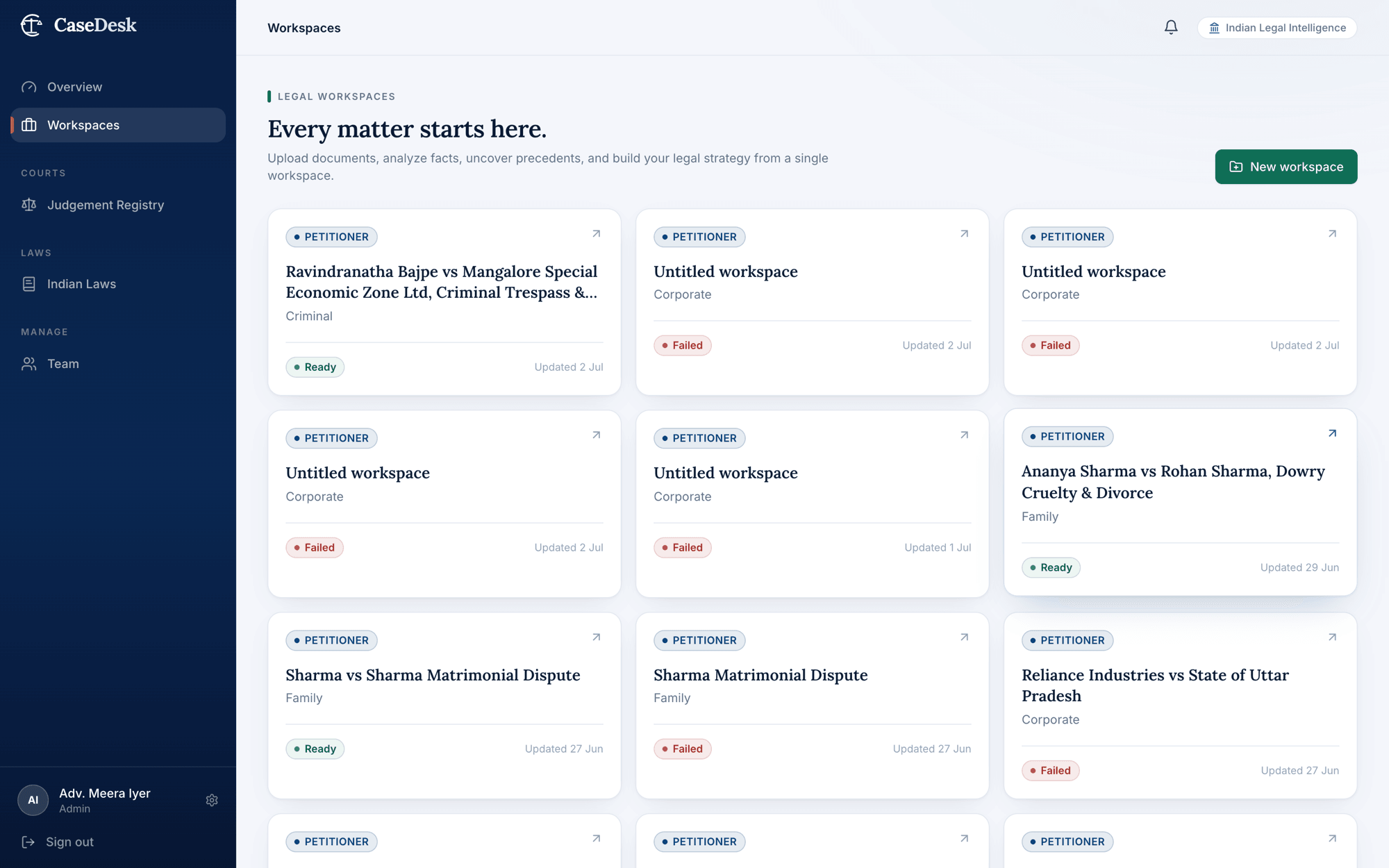
Opening CaseDesk shows every active workspace at a glance: the matter name, practice area, posture, and whether its analysis is ready. Creating a new one takes a matter name, a practice area, and the side you're representing — from there, uploading documents is the only other step before the nine-agent pipeline builds out the full brief.
One workspace, eight sections
Every workspace opens into the same eight-section panel — Overview, Case Strategy, Insights Report, Timeline, Legal Provisions, Precedent, Relevant Parties, and Counsel AI — so a partner moving between matters always knows where to find what they need, regardless of practice area.
Scoped to your firm, and to the right people within it
Case management only works if the access model matches how a firm actually operates. CaseDesk's five roles — Firm Admin, Partner, Associate, Paralegal, and Client — gate what each person can see and do, enforced on the server rather than just hidden in the interface. Read more on Team Collaboration.
Built for litigation practice, not generic project tracking
Unlike a general project-management tool repurposed for legal work, every CaseDesk workspace understands the concepts a matter actually has — postures, limitation periods, applicable statutes, and precedent. See the complete guide to legal case management software for how to evaluate this against what your firm uses today.
Frequently asked questions
How is a workspace organised?
Each workspace represents one matter and carries a practice-area tag and a posture (Petitioner, Respondent, Mediator, or Adjudicator), plus a status showing whether its analysis is ready or still processing.
Can multiple people work on the same matter?
Yes — role-based access (Firm Admin, Partner, Associate, Paralegal, Client) controls who can see and edit a given workspace, so a team can share one matter without exposing it to the whole firm.
Is data shared across different firms using CaseDesk?
No. Every firm is a separate tenant — matters, documents, and analysis are scoped to your organisation and never shared across firms.